
What is Radio Frequency & How is it Used in Skincare?
If someone asked you, "What is radio frequency?" would you know how to answer?
A lot of us would mention something about finding the right music station in the car, but what about using it for skincare treatments?
Well today I’m going to dive into what this awesome service is and how we use it at the spa!
In skincare, radio frequency is a type of energy that can be used to treat different skin concerns. Depending on the device, radio frequency can be used for things like skin tightening, wrinkle reduction, or—as we use it here at Mags Cathey Spa—treating small skin irregularities like skin tags, cherry angiomas, broken capillaries, and other common imperfections.
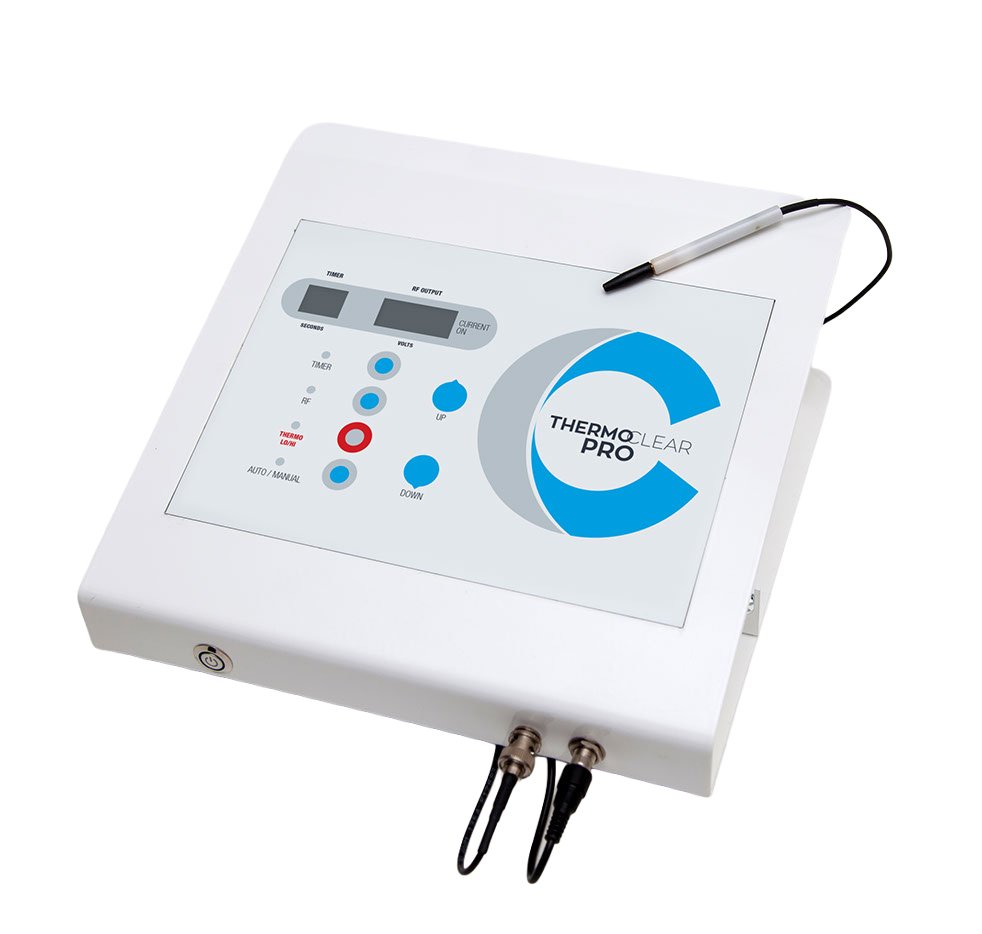
So while you may hear the words "radio frequency" used in a lot of different ways, today we're talking specifically about how we use it with our ThermoClear Pro device.
What is radio frequency?
Radio frequency (RF) is a type of electromagnetic energy. It's actually all around us every day and is used in things like radio and television broadcasting, Wi-Fi, and cell phone communication.
In aesthetics and medicine, specially designed devices harness that energy in a controlled way to create heat within targeted tissue. How that energy is delivered depends on the device—and that's what determines what it can treat.
Some radio frequency devices are designed to stimulate collagen production and tighten skin. Others, like the ThermoClear Pro we use at Mags Cathey Spa, are designed for precision. Using a tiny probe, ThermoClear delivers a brief burst of radio frequency directly to a specific skin irregularity, allowing us to treat concerns like skin tags, cherry angiomas, broken capillaries, sebaceous hyperplasia, and milia while minimizing impact to the surrounding skin.
What can it treat?
One of my favorite things about this treatment is that it can help with so many of the little things people often assume they just have to live with.
Radio Frequency may be used to treat a variety of common skin concerns, including:
Skin tags
Cherry angiomas (those tiny bright red spots)
Spider capillaries (broken capillaries)
Sebaceous hyperplasia (small bumps caused by enlarged or overactive oil glands)
Milia (those tiny white bumps that often appear around the eyes or cheeks)
Sun spots and age spots
Fibromas
Keratoses
Cholesterol deposits (such as certain deposits around the eyes)
Below are a few real before-and-after examples of Radio Frequency treatments we've performed here at Mags Cathey Spa. While every person's skin and healing process is unique, they give you a good idea of the types of concerns this technology can address.

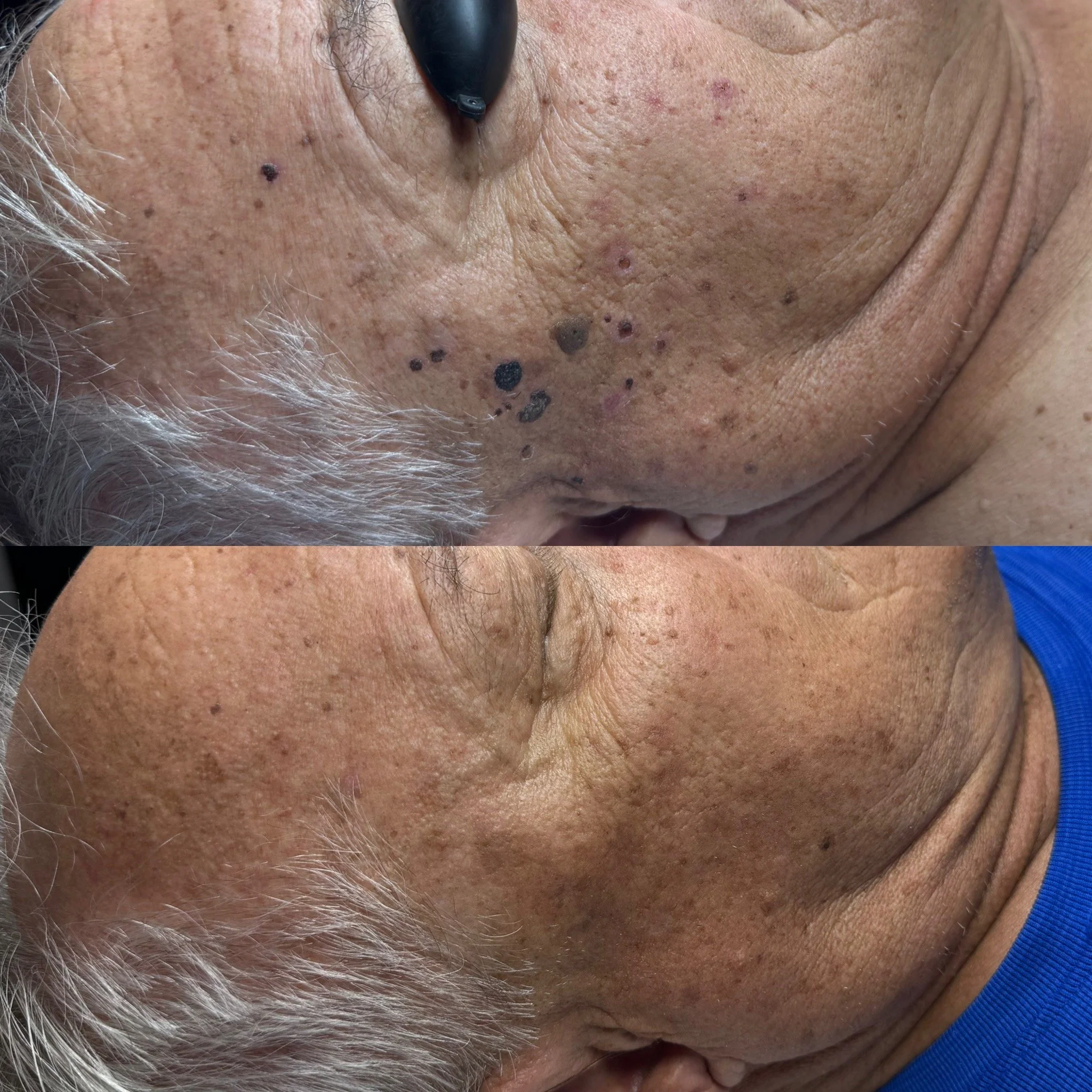
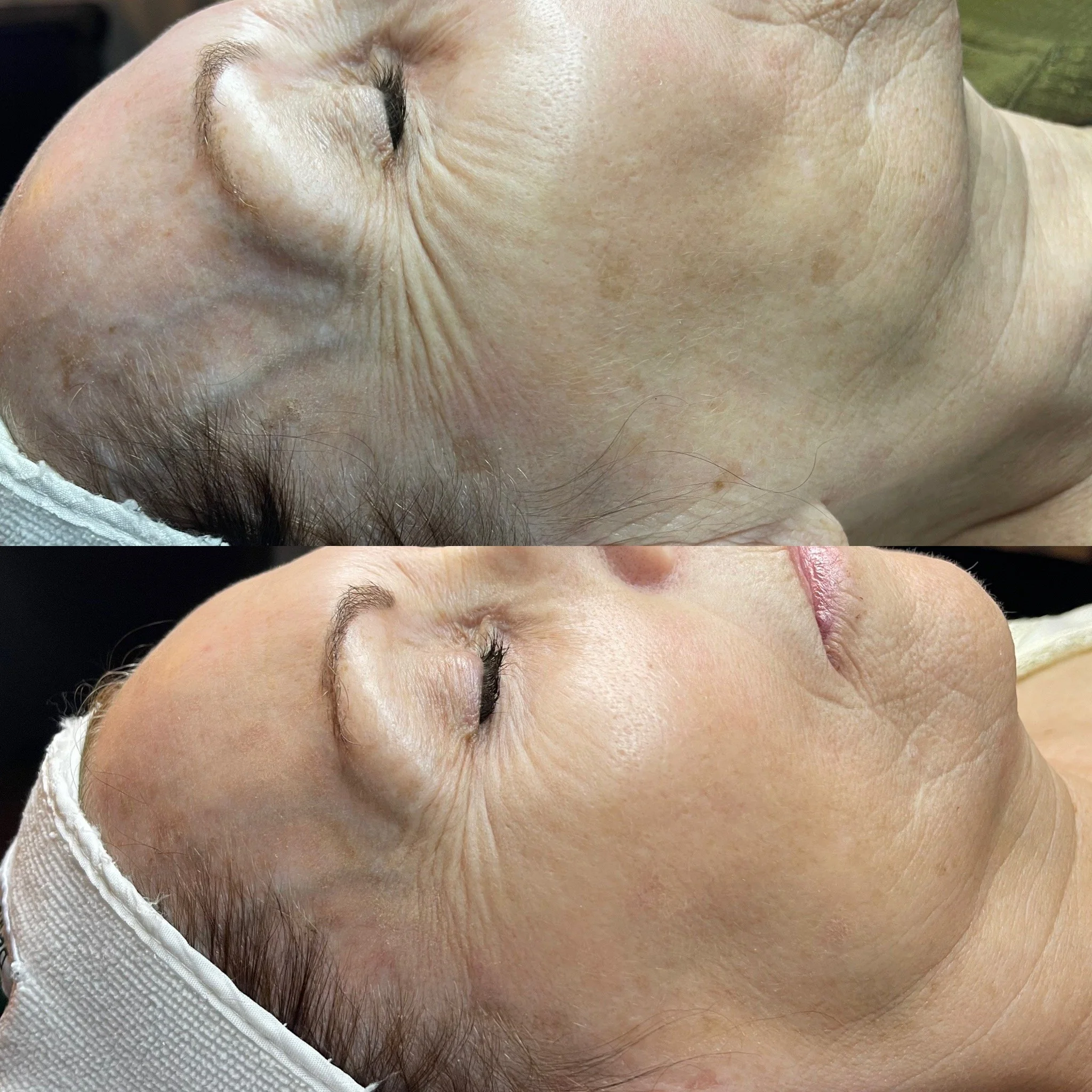
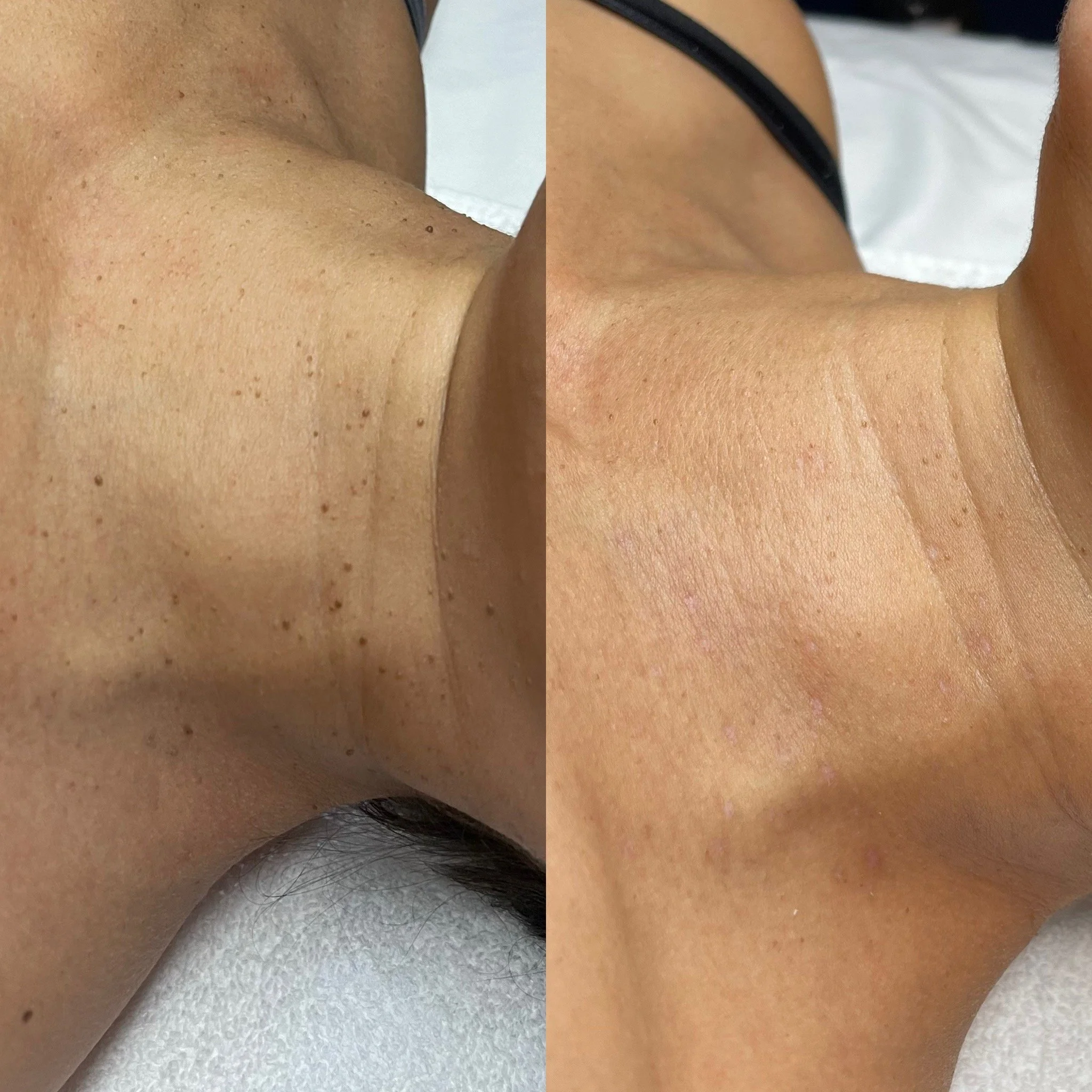
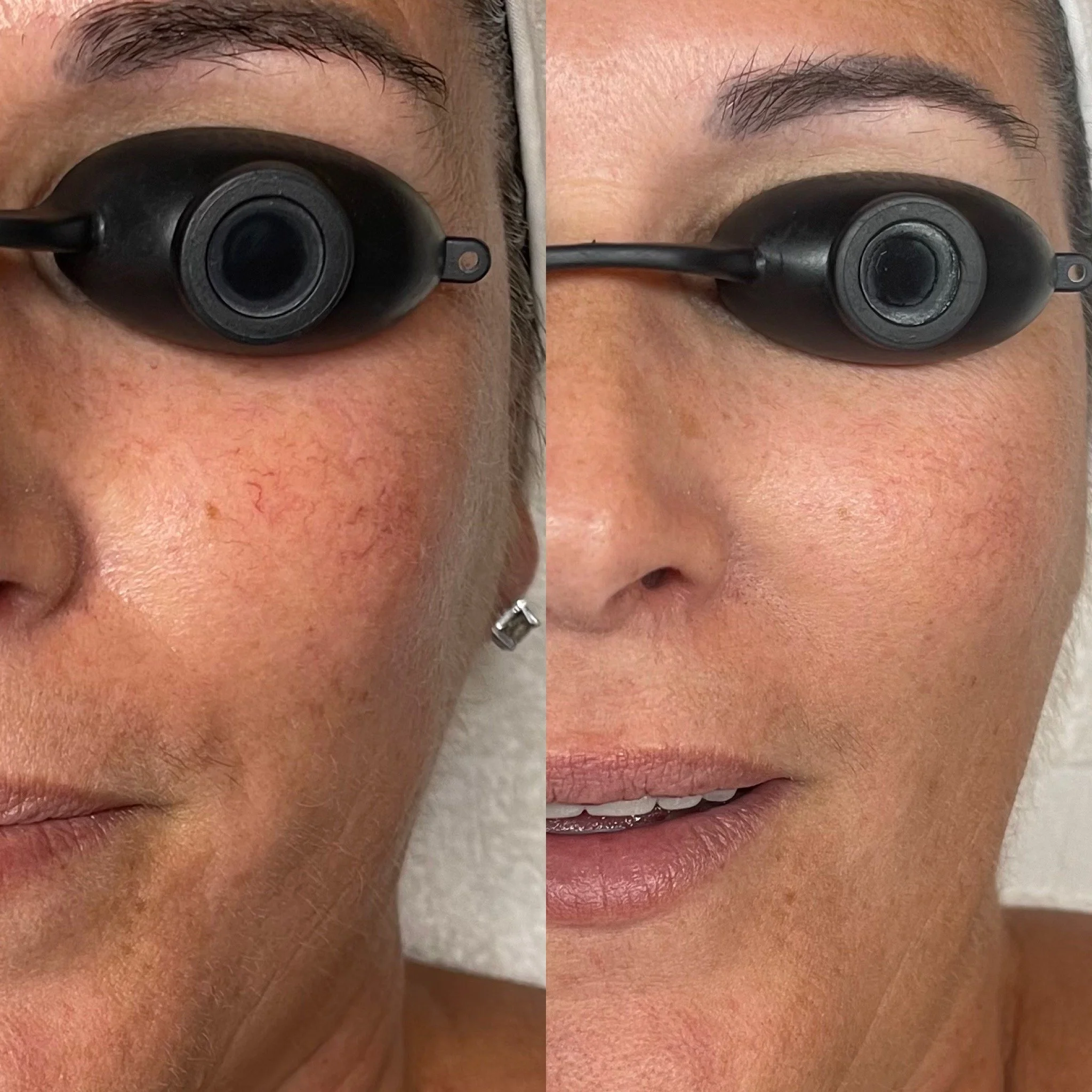
Most of these concerns aren't harmful—they're simply common skin changes that happen over time or because of damage.
They're mostly a cosmetic issue. But they're still something you notice every morning in the mirror and wish would disappear.
That's exactly where this treatment shines.
What is the treatment like?
The treatment itself is actually pretty simple. You can book Radio Frequency as a standalone treatment in 15-minute increments or add it to a facial appointment.
When you come in, we'll first take a look at the area you'd like treated and talk through your goals. From there, we'll let you know whether Radio Frequency is the right option and discuss how many treatments we think you'll need to achieve the best results.
The procedure uses an extremely fine probe to briefly touch the skin, delivering a quick burst of high frequency energy directly to the specific spot we're treating.
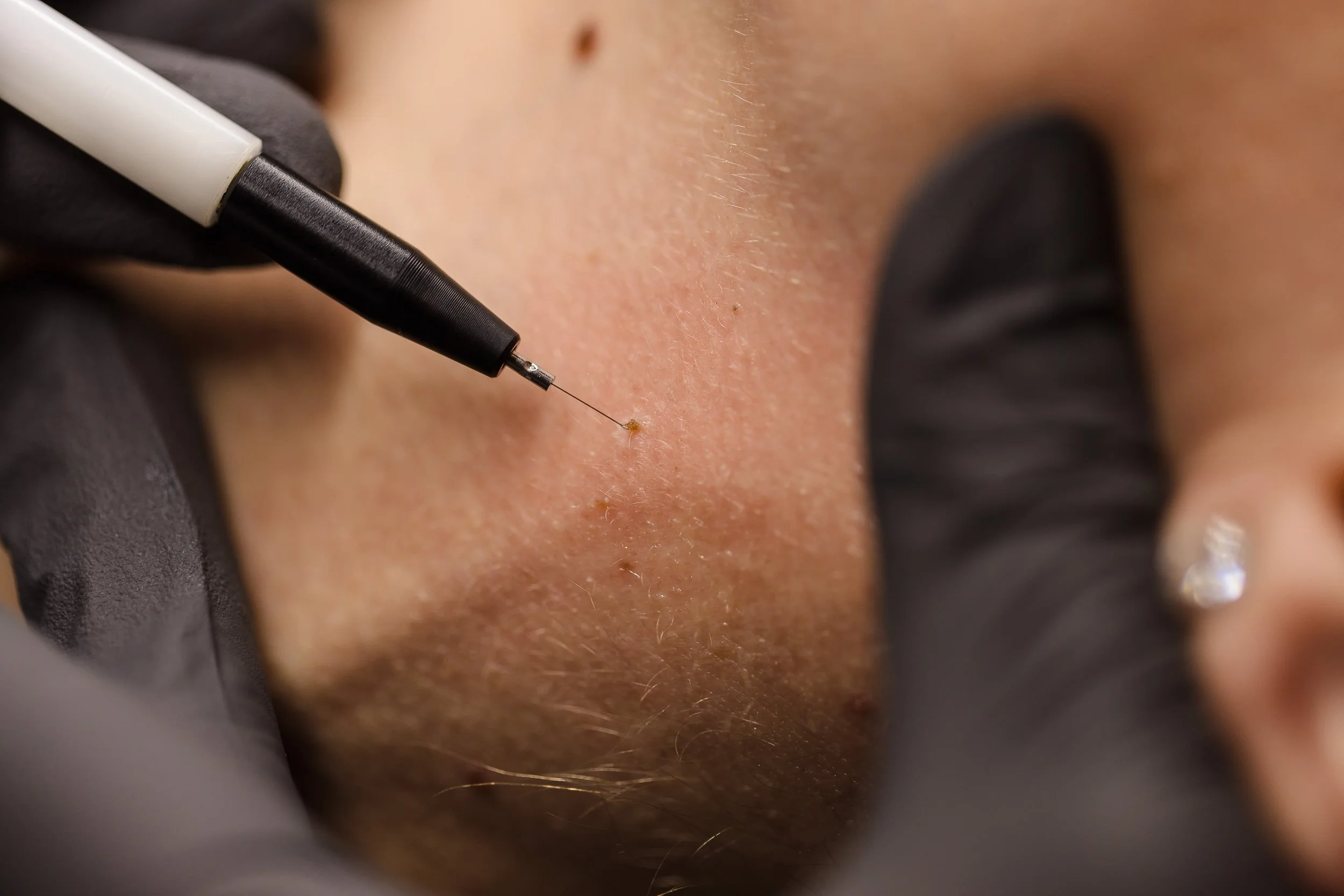
Most people describe it as a warm pinch or little sting that lasts only a second. Depending on the area we're treating, some spots can be a little more sensitive than others. We always work at a pace that's comfortable for you, checking in along the way and giving you breaks when you need them.
How many treatments will I need?
Every skin concern is a little different. Some issues respond after just one treatment, while others, especially larger or more established spots, may benefit from a series of sessions.
We'll create a treatment plan based on the type, size, and number of areas you're looking to treat. Our recommendation is always based on getting you the best results, not on treating more than is needed.
What should I expect after treatment?
Immediately afterward, the treated area may look a little red or swollen. Depending on what we treated, it may also darken or develop a very fine, thin scab as it begins to heal. You may feel a slight itchiness or warmth to the skin in the treated area, almost like your skin got a little sunburned.
This is all a normal part of the process. The most important thing you can do is leave the area alone, be gentle with it and allow your skin to heal naturally. Picking or scratching can prolong healing and increase the chance of scarring. It can also cause hyperpigmentation to develop because instead of the skin healing slowly and safely, you’ve caused damage again by picking at it, so the skin responds by creating more melanin as part of the repair/protection process. So the moral of the story is, don’t pick! Leave it be.
While the area is healing, it’s also a good idea to protect it from unnecessary sun exposure. Freshly healing skin can be more sensitive, and keeping it protected helps support the process and, again, helps avoid the skin developing hyperpigmentation as a result to the sun exposure.
Most treated areas heal within one to two weeks, although the exact timeline varies depending on the concern, its location, and how your individual skin responds.
We’ll also provide personalized aftercare instructions before you leave. Because every treatment is a little different depending on the area and the type of skin concern we’re treating, your aftercare may vary. We’ll make sure you know exactly how to care for your skin and what to expect during the healing process.
Is there downtime?
There usually isn’t downtime in the sense that you have to stay home or put your normal routine on hold. However, the treated spots will be visible while they heal.
You may have some redness, swelling, darkening, or tiny scabs for a period of time. This means you’ll want to think ahead when scheduling your treatment, especially if you have an important event or photos coming up.
Radio Frequency is not an instant “erase button.” Your skin still needs time to complete its natural healing process, and the final result becomes clearer as the treated area settles.
Who is Radio Frequency right for?
Our ThermoClear RF treatment can be a great option for someone who has small, superficial skin irregularities they would like to improve.
ThermoClear is non-invasive, can be used on all skin types, and is designed to precisely treat the skin irregularity rather than the surrounding skin. If you have any of the skin imperfections that we listed above, this treatment will work wonders.
Is Radio Frequency right for you?
One of the reasons I love offering Radio Frequency to our clients is that it addresses the little skin concerns people often assume they simply have to live with or didn’t know they could change.
A skin tag, tiny red spot, or small bump may not seem significant to anyone else, but they're often the things we notice every time we look in the mirror—or even when we're talking face-to-face with our spouse or someone we love. Once you've become aware of them, they can be surprisingly hard to stop noticing.
While these concerns are usually harmless, there's absolutely nothing wrong with wanting to feel a little more confident in your own skin. Self-care isn't just about treating medical problems—it can also be about removing the little distractions that keep you from feeling like your best self.
Radio Frequency treatments give us a precise and personalized way to treat these concerns non-invasively, without surgery or a complicated procedure. However, not every spot should automatically be treated. We’ll always assess the area first, and if we feel there is anything that looks unusual or needs to be checked by a doctor, we will always let you know before we proceed with cosmetic treatment.
If you have a spot you've been wondering about, we'd be happy to take a look, talk through your options, and create a treatment plan based on what your skin actually needs.
